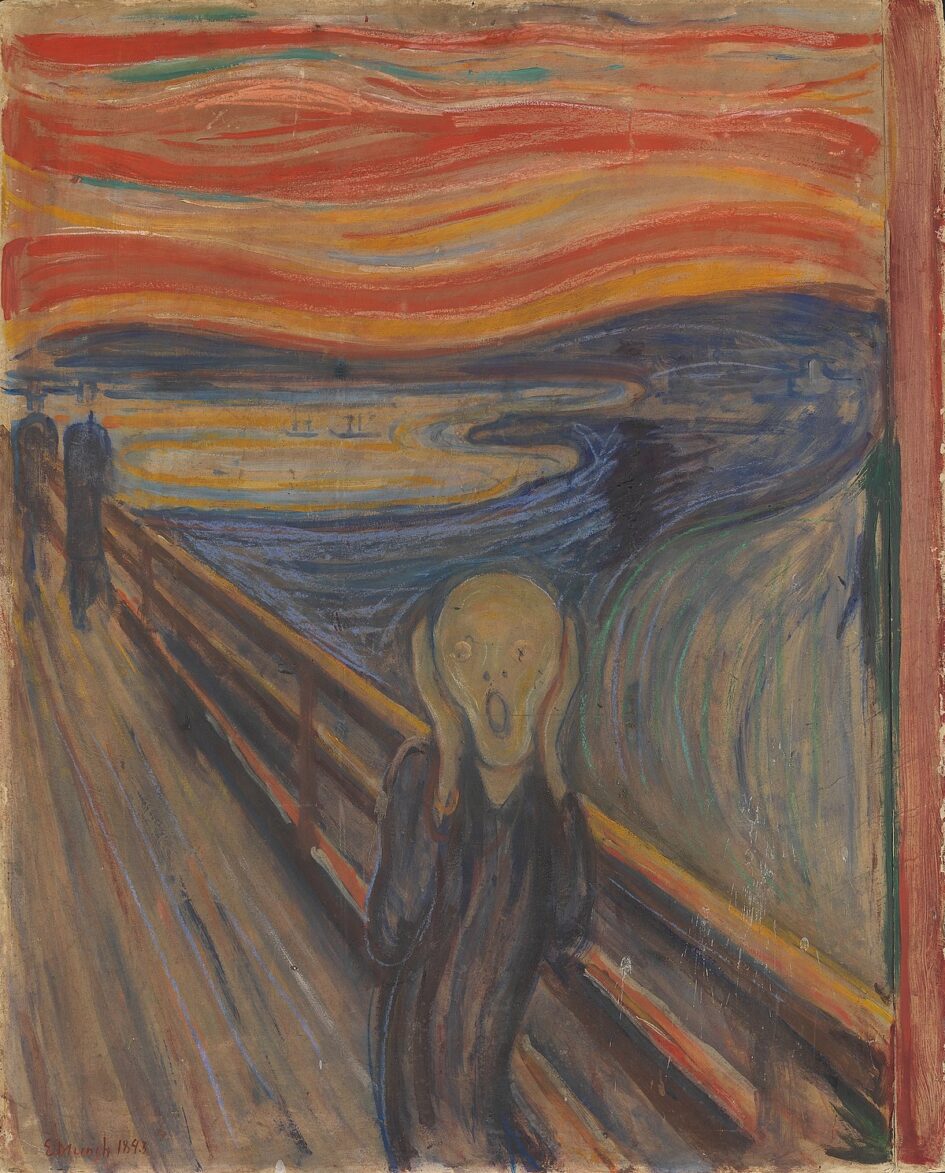
I, and many others, often think of the science of acoustics as something of a black art. It’s not an art, however, and therefore I sometimes refer to it as a ‘black science’. The physics, like all science, is black and white but there are many shades of grey in its application and interpretation.
The reason for the shades of grey? It’s our fault. Humans. If we didn’t respond to noise in a manner of different ways I would be out there designing bridges and laybys. Fortunately we do, however, and therefore, in my opinion, my job is way more interesting than that of any other engineering discipline. Acousticians exist to engineer sound and noise (the definition of noise is unwanted sound) to improve human perception. That may be by improving the sound quality and audience experience in a concert hall, by designing a cinema to ensure that you can’t hear the sound from the neighbouring screen or (and this is where my personal interest mainly lies) in reducing noise impact in the environment and workplace to enable people to live their lives without disturbance, psychological or physiological harm.
Humans are amazingly complex machines. Our ears are incredibly sensitive. You are probably aware that we measure and quantify noise levels in decibels. Our ears, however, perceive noise as changes in pressure, which is normally measured in Pascals which is a force applied over a defined area. We use the decibel scale, however, because the variation in level that the ear can detect is so high that if we reported noise levels in Pascals the range of numbers involved would be utterly unwieldy; around 14 orders of magnitude.. that’s a lot 0s both before and after the decimal point! The decibel scale is logarithmic and it condenses those 0s into more manageable numbers typically ranging from 20 dB (the threshold of hearing- the minimum level that we can hear) to around 130 dB (the threshold of pain).
Our physiological complexity doesn’t end there. This is just the beginning! We also have varied subjective response to sound at different frequencies. A healthy (young!) adult typically can hear noise in the frequency range between 20 Hz and 20 kHz but this varies enormously in itself. Young babies tend to be able to hear higher frequencies but this reduces relatively quickly and as we age our ability to hear sounds at higher frequencies in particular tends to reduce. ‘Normal’ humans are most sensitive to sound between 2 and 4 kHz and our capacity to hear low frequency sounds drops rapidly at frequencies below 100 Hz. It is no coincidence that the frequency of a newborn baby’s cry is typically between 400 and 500 Hz- close to the range that we are most sensitive to and also the auditory frequencies that remain most resistant to hearing loss from aging. Nature really is amazing!
Last but not least we have to add in the biggest variable of all. Psychology. This is where it gets really interesting! Sound comes in all shapes and sizes. By this I mean generally it isn’t benign in nature. It has variations in level and in character. The noise from road traffic which is continuously moving might be considered steady and continuous and we respond to that in a particular way. We’re quite good at habituating to this type of sound (we get used to it)- although- not wishing to play this down at all- the documented health effects from exposure to road traffic noise are frightening in themselves. If, however, a vehicle on that road sounds its horn as it passes this adds a new dimension to the character of the noise. It’s a short-term tonal sound that by design is intended to create a reaction. If you happen to live by that busy road the sound from the horn might cause annoyance, stress or sleep disturbance. If it then occurs frequently enough it can also result in physical health issues; cardiovascular disease, diabetes etc.
So sound is very rarely benign. Most often it has character- tones, impulses, intermittence and this character makes it more distinctive in the environment than ‘benign’ (steady and continuous) sound at the same level. Someone living close to a metal working plant who experiences sound with tonal and impulsive character might be more disturbed than someone living adjacent to a road (which has less character) even if the noise level from the road is greater.
Finally, our brains are great at playing games with us. We can lie in bed at night worrying about the size of our mortgage and associate that sleep disturbance to a distant sound. We think it is the noise that is keeping us awake. If we do this too often an association begins and this develops into an unhealthy cycle. A small proportion of the population are also over-sensitive to infrasound which is sound that occurs at frequencies below 20 Hz and which is inaudible to most of us. This is a horrible debilitating condition which I see frequently in the course of my consultancy work and which I intent to write about in more detail in a future post.
In conclusion the science of acoustics is without doubt ‘black’ and it’s all our fault! If humanity survives perhaps in 100,000 years time we’ll evolve and won’t require hearing (or acousticians or indeed bridge and layby engineers!) at all. In the meantime, I hope the above provides a little bit of context for those sometimes complex, unwieldy and heavily caveated technical reports that we have to write.
9 September 2022 at 12:24
Itís nearly impossible to find educated people about this subject, however, you seem like you know what youíre talking about! Thanks
15 May 2025 at 07:55
Acoustics is indeed a fascinating field, and I love how it bridges science and human experience. It’s interesting how you describe it as a “black science” because of the complexity and subjectivity in its application. I never thought about how much human perception shapes the work of acousticians—it’s almost like you’re not just engineering sound but also engineering how people feel. The part about reducing noise impact in the environment really resonates with me; it’s such an important yet often overlooked aspect of our daily lives. I’m curious, though, how do you balance the technical precision of acoustics with the subjective nature of human perception? Do you ever find it challenging to measure something so inherently personal? Also, what’s the most surprising or unexpected discovery you’ve made in your work? I’d love to hear more about the human side of acoustics—how do you think it shapes our emotions and well-being beyond just reducing noise?